

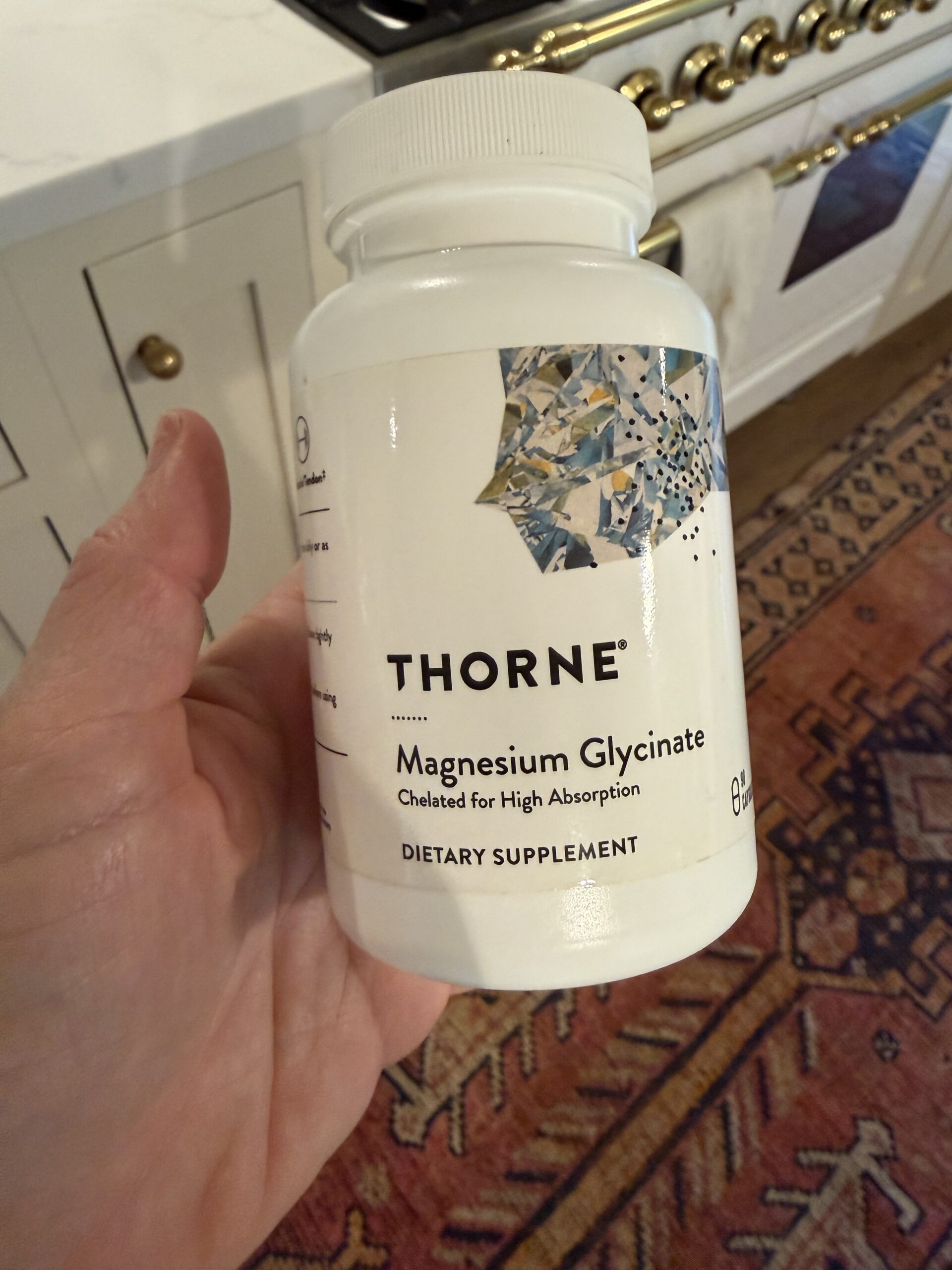
If you’ve spent any time on social media lately, you’ve probably heard someone tell you that you need magnesium.
Can’t sleep? Magnesium.
Stressed? Magnesium.
Constipated? Magnesium.
Muscle cramps? Magnesium.
Going through perimenopause? Definitely magnesium.
And while I’m always cautious when one supplement starts sounding like the answer to everything, magnesium really is an important mineral and many women aren’t getting as much as they need from food.
But that doesn’t mean everyone needs the same supplement or the same dose.
So let’s break down what magnesium actually does, the different types of magnesium, how much women need, and how to decide whether supplementing makes sense for you.
What Is Magnesium?
Magnesium is an essential mineral your body needs every day.
It plays a role in hundreds of processes throughout the body, including muscle and nerve function, blood sugar regulation, blood pressure, bone health, and the production of protein and DNA.
In other words, magnesium isn’t just a “sleep supplement.”
It’s a foundational nutrient involved in systems throughout your entire body.
And that’s important, because when I’m working with women, I’m rarely looking at sleep, digestion, blood sugar, energy, stress, and hormones as completely separate issues.
They’re connected.
Are You Getting Enough Magnesium?
Many Americans consume less magnesium through food than recommended.
That doesn’t automatically mean you have a magnesium deficiency or that you need a supplement. But it does mean magnesium-rich foods are worth paying attention to.
Certain health conditions and medications can also interfere with magnesium absorption or increase magnesium losses.
People with certain gastrointestinal conditions, type 2 diabetes, long-term heavy alcohol use, and older adults can be at greater risk of inadequate magnesium status.
Some medications can affect magnesium too. For example, long-term use of certain medications used for acid reflux can lead to low magnesium levels, and some diuretics can alter magnesium losses.
This is one reason I don’t love the idea of choosing supplements based solely on a symptom checklist.
Your health history matters.
Your medications matter.
Your diet matters.
The whole picture matters.
What Are the Benefits of Magnesium for Women?
Magnesium’s role in the body goes far beyond one specific symptom.
Magnesium and Energy
Magnesium is involved in the processes your cells use to produce and use energy.
That doesn’t mean taking magnesium will automatically fix fatigue. If you’re exhausted, I also want to know what’s happening with your sleep, blood sugar, iron, B12, thyroid, food intake, stress, and other potential contributors.
But getting enough magnesium is one part of supporting normal energy metabolism.
Magnesium and Sleep
Magnesium is involved in normal nervous system and muscle function, which is one reason it has become so popular as part of an evening routine.
Some people find magnesium helpful for relaxation, but I wouldn’t treat it as a magic sleep supplement.
If you’re waking up every night at 2 or 3 a.m., having night sweats, struggling to fall asleep, or waking exhausted despite spending eight hours in bed, there’s probably a bigger conversation we need to have about why your sleep is being disrupted.
Magnesium and Muscle Function
Magnesium plays an important role in normal muscle contraction and relaxation.
Severe magnesium deficiency can contribute to muscle cramps and other neuromuscular symptoms, although having occasional cramps doesn’t automatically mean you’re deficient in magnesium.
Hydration, electrolyte balance, physical activity, medications, and other factors can play a role too.
Magnesium, Stress, and Mood
Magnesium is involved in normal nervous system function, which has led researchers to explore its relationship with stress, anxiety, and mood.
This is an area where I’m careful about overpromising.
Magnesium isn’t a treatment for anxiety, and feeling stressed doesn’t automatically mean you’re magnesium deficient.
But adequate nutrition—including magnesium—is part of giving your nervous system the raw materials it needs to function normally.
Magnesium and Blood Sugar
Magnesium plays a role in glucose metabolism and normal insulin function.
This is especially interesting to me when working with women in their 40s because blood sugar regulation can become an increasingly important piece of the perimenopause picture.
If you’re suddenly experiencing intense afternoon cravings, energy crashes, feeling shaky between meals, or changes in your body composition, I don’t just want to throw a supplement at it.
I want to look at how you’re eating throughout the day, especially protein, fiber, carbohydrates, meal timing, sleep, stress, and movement.
Magnesium can be part of the picture.
It isn’t the whole picture.
Magnesium and Digestion
Certain forms of magnesium are also used for constipation because they can draw water into the intestines and have a laxative effect.
That’s why the type of magnesium you choose matters.
The magnesium someone takes as part of a bedtime routine may not be the same form someone chooses specifically for constipation.
The Different Types of Magnesium
This is where people tend to get overwhelmed.
Walk into the supplement aisle and you’ll see magnesium glycinate, citrate, oxide, malate, L-threonate, chloride—and probably several blends combining more than one.
You don’t need to memorize all of them.
Here are some of the forms you’ll commonly encounter.
Magnesium Glycinate
Magnesium glycinate is a popular form because it is generally well tolerated and is commonly used as part of an evening relaxation routine.
If someone is interested in magnesium but doesn’t specifically need its laxative effect, this is often one of the forms they’ll encounter.
Magnesium Citrate
Magnesium citrate is a relatively well-absorbed form of magnesium and can also have a laxative effect.
For that reason, it may be a consideration for someone who is also dealing with constipation.
But more isn’t better.
Too much supplemental magnesium can cause diarrhea, nausea, and abdominal cramping.
Magnesium Malate
Magnesium malate combines magnesium with malic acid.
You’ll often see this form marketed for energy and muscle support. While it can be an option for magnesium supplementation, I’d be careful with claims that it specifically “boosts energy.” The evidence isn’t strong enough to make magnesium malate an energy treatment.
Magnesium L-Threonate
Magnesium L-threonate is frequently marketed for brain health because it has been studied for its potential neurological effects.
It’s also typically more expensive than other forms.
Research is still developing, so I wouldn’t automatically recommend spending more on this form simply because the marketing sounds impressive.
Magnesium Oxide
Magnesium oxide is inexpensive and commonly found in supplements and laxative products.
It tends to be less bioavailable than several other forms and is also more likely to have a laxative effect.
Depending on your goal, another form may be more appropriate.
What Is the Best Type of Magnesium for Women?
There isn’t one “best” magnesium for every woman.
The best form depends on why you’re taking it.
If you’re looking for a generally well-tolerated magnesium supplement and don’t want a strong laxative effect, magnesium glycinate is a popular option.
If constipation is your primary concern, magnesium citrate may make more sense.
Other forms may be appropriate depending on your individual health history and goals.
And sometimes the answer is that you don’t need a magnesium supplement at all.
That’s why I prefer asking:
What are we actually trying to accomplish?
Rather than:
Which supplement is everyone taking right now?
When Is the Best Time to Take Magnesium?
There isn’t one perfect time to take magnesium.
If you’re taking magnesium glycinate as part of a nighttime routine, taking it in the evening may make sense.
If another form feels better earlier in your day, that’s fine too.
The most important things are choosing an appropriate form and dose and taking it consistently.
And remember: if you’re taking prescription medications, timing can matter.
Magnesium supplements can interfere with the absorption of certain medications, including some antibiotics and medications used for osteoporosis. Some medications can also affect magnesium status.
If you’re taking prescription medication, talk with your healthcare provider or pharmacist about whether magnesium is appropriate and how far apart your medication and supplement should be taken.
How Much Magnesium Do Women Need?
For most adult women, the recommended daily amount of magnesium is:
Ages 19–30: 310 mg per day
Ages 31 and older: 320 mg per day
That includes magnesium from food, beverages, and supplements combined.
And there’s an important distinction here.
The upper limit for magnesium from supplements and medications for adults is 350 mg per day unless otherwise directed by a healthcare professional.
That limit does not include the magnesium naturally present in food.
This is why I wouldn’t automatically tell every woman to take 400 mg of supplemental magnesium just because that’s a common recommendation online.
More isn’t always better.
Foods High in Magnesium
Before we talk supplements, let’s talk food.
Some of the best dietary sources of magnesium include:
- Pumpkin seeds
- Chia seeds
- Almonds and cashews
- Spinach and other leafy greens
- Black beans and other legumes
- Whole grains
- Avocado
- Dark chocolate
- Fortified foods
I prefer a food-first approach whenever possible because you’re never getting just magnesium from these foods.
You’re also getting fiber, healthy fats, protein, antioxidants, and other vitamins and minerals your body needs.
That’s a much bigger nutritional win than simply checking off one nutrient.
Magnesium and Perimenopause
If you’re in your 40s and suddenly paying more attention to magnesium, there’s a reason it comes up so often in conversations about perimenopause.
Think about some of the things women commonly tell me:
“I’m exhausted even though I’m sleeping.”
“I’m suddenly waking up in the middle of the night.”
“I’m constipated when I never used to be.”
“My cravings are out of control by 3 p.m.”
“I feel more anxious and overwhelmed than I used to.”
“My body just isn’t responding the way it did before.”
Magnesium is involved in many of the same systems we’re thinking about when these symptoms show up—muscle and nerve function, blood sugar regulation, energy metabolism, digestion, and more.
But here’s the important part:
Magnesium isn’t a cure for perimenopause.
And having those symptoms doesn’t automatically mean you’re deficient in magnesium.
It’s one piece of a much bigger picture.
When I work with women in perimenopause, I’m not looking for one supplement that’s going to fix everything.
I’m looking at how she’s eating.
Her blood sugar.
Her digestion.
Her sleep.
Her stress.
Her hormones.
Her movement.
Her medications and supplements.
And how all of those things are interacting.
Because sometimes adding magnesium makes sense.
And sometimes the better question is:
Why are you exhausted, constipated, waking up at night, or struggling with cravings in the first place?
That’s the difference between chasing symptoms and looking at the whole picture.
Who Should Be More Mindful of Magnesium?
It’s worth paying attention to your magnesium intake if your diet doesn’t regularly include magnesium-rich foods or if you have health factors that can increase your risk of inadequate magnesium.
That can include certain gastrointestinal conditions, type 2 diabetes, long-term heavy alcohol use, and some medications.
Symptoms like fatigue, weakness, nausea, or muscle cramps can occur with magnesium deficiency—but they’re also associated with many other conditions.
So I don’t recommend diagnosing a magnesium deficiency based on symptoms alone.
If you’re concerned, talk with your healthcare provider or Registered Dietitian about your diet, medications, symptoms, and whether further evaluation makes sense.
The Healthy to the Core Takeaway
Magnesium deserves attention.
But probably not for the reason social media would have you believe.
It isn’t a magic sleep supplement, stress cure, hormone balancer, or answer to every symptom you’re experiencing in your 40s.
It’s a foundational nutrient your body needs to function well.
Start by getting more magnesium-rich foods onto your plate.
If a supplement makes sense for you, choose the form based on what you’re actually trying to support—not which bottle happens to be trending.
And most importantly, don’t let another supplement distract you from asking the bigger question:
Why am I feeling this way in the first place?
Your body doesn’t operate as a collection of separate symptoms.
Sleep, stress, blood sugar, digestion, hormones, nutrition, and metabolism all interact.
That’s the approach I take at Healthy to the Core—and it’s especially important during perimenopause, when it can feel like everything changed at once.
You don’t need another list of foods to cut out or another cabinet full of supplements.
You need to understand what your body needs now.
If you’re in your 40s and feel like your old healthy habits aren’t working anymore, the CORE Reset for Perimenopause™ is where we start. Together, we work on the foundations—nutrition, blood sugar, gut health, sleep, stress, and hormones—without calorie counting or unnecessary restriction.
Learn more about the GUT-FIRST Method for Perimenopause
This article is for educational purposes only and is not intended to diagnose, treat, cure, or prevent any medical condition. Talk with your physician, Registered Dietitian, pharmacist, or other qualified healthcare professional before starting a new supplement, particularly if you have a medical condition, kidney problems, are pregnant or breastfeeding, or take prescription medications.
Sources
National Institutes of Health, Office of Dietary Supplements. Magnesium Fact Sheet for Consumers.

If you’ve tried changing your diet, taking supplements, or just “eating healthier” but still don’t feel like yourself, this free masterclass will show you what may be getting missed and the root-cause approach I use with my clients.
Discover what may actually be driving your symptoms and why another restrictive diet probably isn’t the answer.
Still struggling with bloating, low energy, or a gut that just feels… off?

This website template was designed using 100% solar power
TERMS & CONDITIONS | PRIVACY | Join The NewsLetter
A New York City-based Registered Dietitian and Functional Nutritionist, specializes in gut health, hormone balance, and root cause nutrition. Sam is dedicated to helping clients uncover and address the underlying causes of their health issues for lasting wellness.
MEET sam

